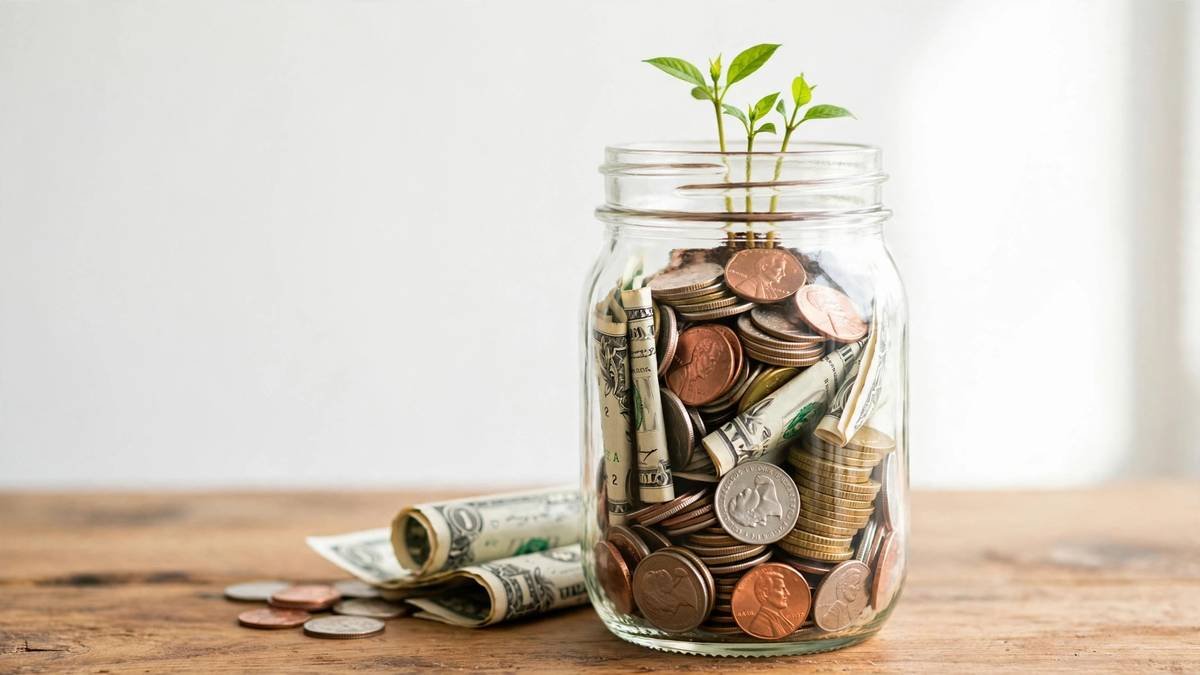
What Is a High-Yield Savings Account?
A high-yield savings account (HYSA) is a type of deposit account that pays a noticeably higher annual percentage yield (APY) than a standard savings account at a traditional brick-and-mortar bank. The underlying product is the same — your money sits in an insured deposit account and earns interest — but the rate of return is substantially better.
The reason high-yield accounts can offer stronger rates comes down to cost structure. Most of the most competitive HYSAs are offered by online banks, digital-first banks, and credit unions that operate without a large branch network. Lower overhead means they can pass more of their earnings back to depositors in the form of interest. Traditional banks, which maintain thousands of physical branches and large staffs, typically pay only a fraction of a percent on standard savings accounts.
Like ordinary savings accounts, high-yield savings accounts at federally insured institutions are protected up to the legal limit per depositor, per institution — FDIC insurance for banks and NCUA insurance for credit unions. That protection applies regardless of whether the bank has physical branches or operates entirely online.
How a High-Yield Account Differs From Regular Savings
Beyond the interest rate, there are a few practical differences worth understanding before you move your money.
Interest Rates
This is the headline difference. A regular savings account at a large traditional bank may pay an APY that barely registers, while a competitive high-yield account can pay many times more. Over a year, the gap on a meaningful balance — say an emergency fund of several months of expenses — can amount to hundreds of dollars in extra interest.
Access and Convenience
Traditional savings accounts come with branch access, in-person service, and often a linked ATM network. Online high-yield accounts typically offer access through a mobile app and website, with customer service by phone, chat, or email. Transfers between your HYSA and a linked checking account at another bank usually take one to three business days, so it is wise to keep a small buffer in checking for immediate needs.
Fees and Minimums
Many high-yield accounts charge no monthly maintenance fee and require no minimum balance to earn the advertised rate. Traditional accounts are more likely to impose monthly fees that can be waived only by maintaining a minimum balance or meeting activity requirements. When comparing accounts, the absence of fees is nearly as important as the rate itself.
What to Look for When Choosing an Account
Not every account marketed as “high-yield” is equally good. Evaluate candidates on the following criteria.
APY and How It Is Calculated
Look at the annual percentage yield, not just the interest rate — APY accounts for compounding and is the true measure of what you will earn. Check whether the advertised APY applies to your entire balance or only within certain balance tiers. Some accounts pay a top rate only above a threshold, with a lower rate on smaller balances.
Rate History and Stability
Savings rates are variable and move with the broader interest-rate environment. An account that consistently ranks near the top of the market over time is generally a better choice than one that spikes briefly as a promotion and then drops. Look for banks with a track record of staying competitive rather than chasing short-lived teaser rates.
Fees
Favor accounts with no monthly maintenance fee, no minimum-balance fee, and no excessive-transaction fees. Also check for less obvious charges: outgoing wire fees, paper statement fees, or fees for closing the account within a short period.
Minimum Deposit and Balance Requirements
Many of the best high-yield accounts have no minimum opening deposit and no minimum balance to earn interest. If an account does require a minimum, make sure it fits comfortably within the amount you plan to keep there.
FDIC or NCUA Insurance
Confirm the institution is federally insured and understand the coverage limits. If your balance exceeds the insured limit, consider spreading funds across institutions or using a bank that offers pass-through coverage through a sweep network.
Digital Experience
Since you will manage an online account primarily through an app or website, the quality of the digital experience matters. Look for a well-reviewed mobile app, easy external transfers, mobile check deposit, and responsive customer support.
Online Banks vs. Traditional Banks
The choice between an online bank and a traditional bank for your savings comes down to what you value most.
- Online banks generally offer the highest APYs, the lowest fees, and polished mobile apps. The trade-off is no in-person branches and transfer times of a day or more when moving money to another institution.
- Traditional banks offer branch access, instant internal transfers between your checking and savings, and face-to-face service. The trade-off is significantly lower savings rates and often higher fees.
- Credit unions sit somewhere in between — many offer competitive rates with a community feel, though their digital tools can lag behind the best online banks.
A common and effective setup is to keep everyday checking at a traditional bank or credit union for convenience, while parking savings — especially an emergency fund — in a high-yield account online where it earns more.
How to Open a High-Yield Savings Account
Opening an account is straightforward and usually takes less than fifteen minutes.
1. Compare and Choose
Shortlist two or three accounts using the criteria above, then pick the one with the best combination of rate, fees, and features for your situation.
2. Gather Your Information
You will typically need your Social Security number, a government-issued ID, your address, and the routing and account numbers of the bank account you will use for the initial funding transfer.
3. Complete the Application
Fill out the online application, agree to the disclosures, and submit. Many banks approve applications instantly; some require additional identity verification that can take a day or two.
4. Fund the Account
Link an external checking account and initiate a transfer. The first transfer may take a few business days to clear. Once funded, consider setting up automatic recurring transfers so your savings grow without ongoing effort.
Common Mistakes to Avoid
- Chasing teaser rates: an account advertising an eye-catching rate that applies only for a few months, or only to new customers, often ends up paying less over a full year than a consistently competitive account.
- Ignoring fees: a monthly maintenance fee can wipe out the interest advantage entirely on a modest balance. Always do the math net of fees.
- Keeping everything in one low-rate account: inertia is expensive. Moving idle savings from a near-zero account to a high-yield one is one of the simplest financial upgrades available.
- Raiding the emergency fund: a high-yield account works best when the money stays put. Keep a separate, smaller buffer for impulse spending so your emergency fund keeps compounding.
Is a High-Yield Savings Account Right for You?
A high-yield savings account is an excellent home for money you want to keep safe and accessible while earning a meaningful return: an emergency fund, a down-payment fund, a vacation fund, or any short-to-medium-term savings goal. It is not the right vehicle for long-term wealth building — over decades, diversified investments have historically outpaced savings rates — but for cash you may need within the next few years, it is hard to beat the combination of safety, liquidity, and yield.
The bottom line: if your savings are sitting in a traditional account earning next to nothing, opening a high-yield account is one of the highest-return uses of fifteen minutes you will find in personal finance.